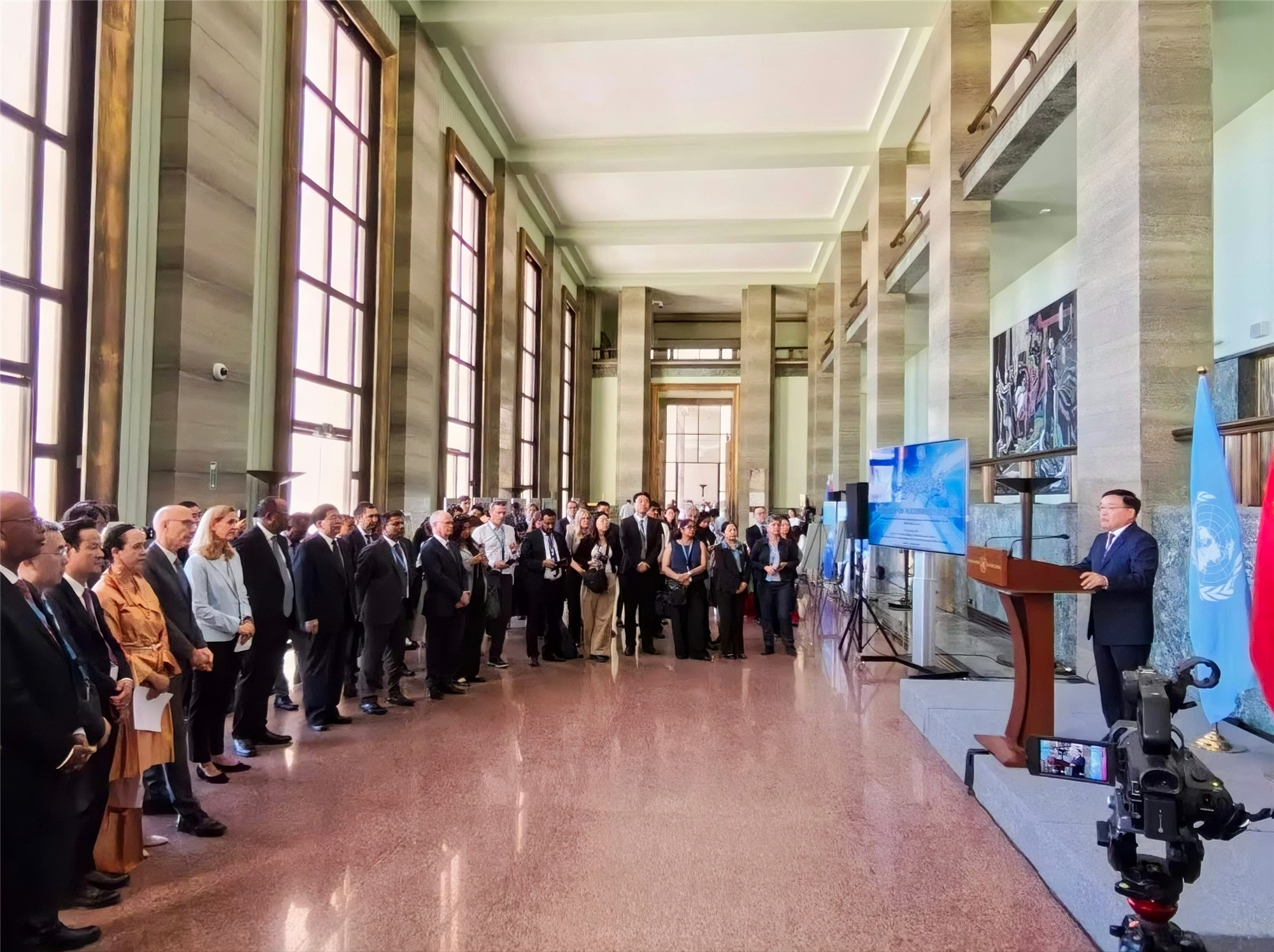
On 15 September, on the margins of the 63rd session of the UN Human Rights Council, the Permanent Mission of the People’s Republic of China to the United Nations Office at Geneva (UNOG) and Other International Organizations in Switzerland, in collaboration with UNOG, hosted the thematic exhibition “Accessibility for All” at the Palais des Nations. Remarks were delivered by Ambassador Mr. Jia Guide, Permanent Representative of China to the United Nations Office at Geneva and Other International Organizations in Switzerland; Mr. Volker Türk, United Nations High Commissioner for Human Rights; Ms. Charlotte Warakaulle, Chief of the UN Library in Geneva, speaking on behalf of Ms. Tatiana Valovaya, Director-General of UNOG; and Mr. Lu Xiaoguang, Vice-President of the Presidium of the Beijing Disabled Persons’ Federation. Permanent Representatives of Cameroon, Ethiopia, Mexico also addressed the event. Over 300 attendees, including permanent representatives of Member States, heads of international organizations, and Chinese and foreign journalists, took part in the activity.
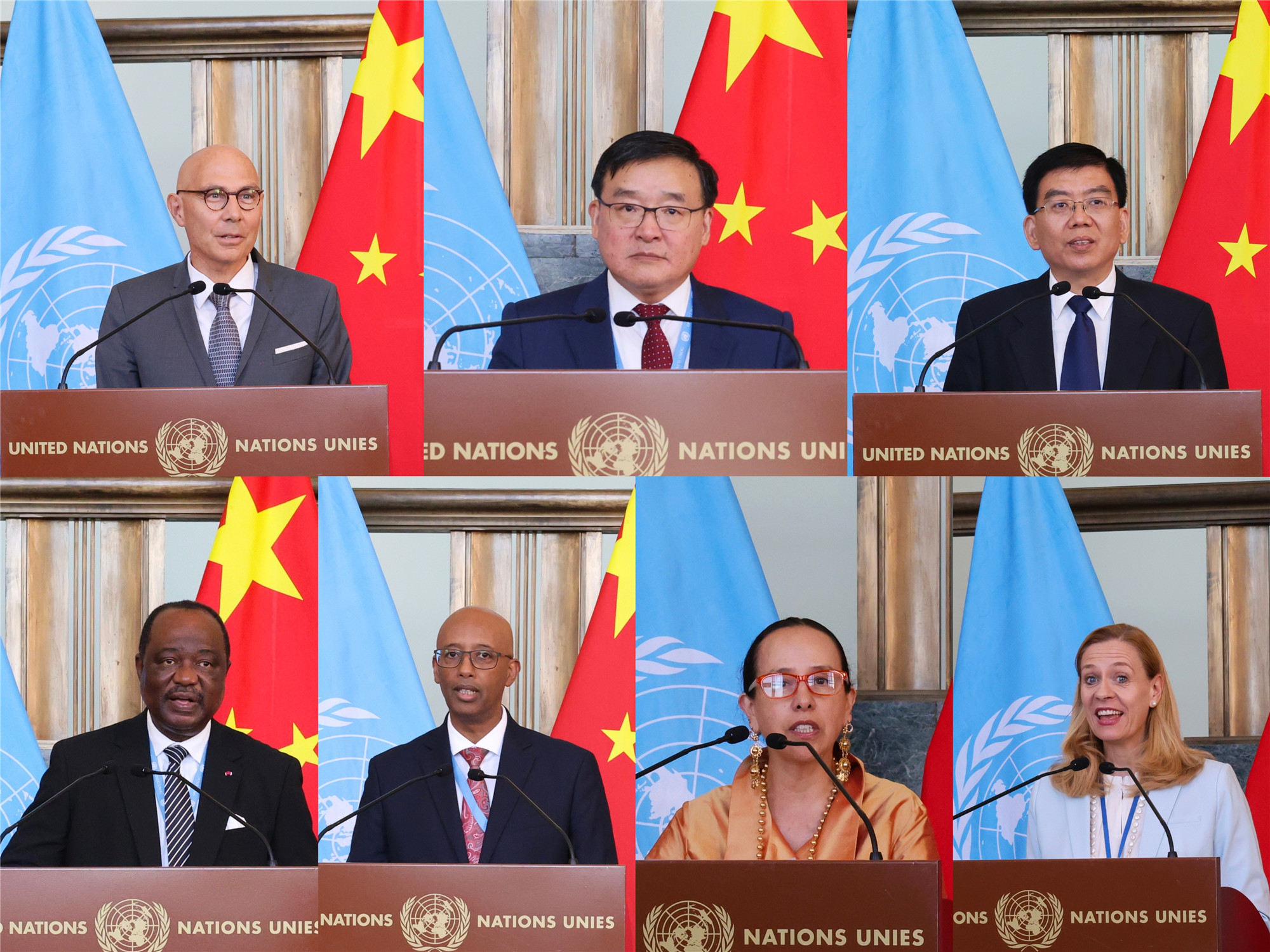
Ambassador Jia pointed out that advancing the development of an accessible environment is an important facet of human-rights protection. Guided by the Global Governance Initiative, China actively advocates the vision of “Accessibility for All” within United Nations forums. This year marks the third anniversary of the entry-into-force of China’s Law on the Construction of Barrier-Free Environments. To mark this milestone, China will once again submit a resolution on accessibility at the current session of the Human Rights Council, bringing fresh perspectives and momentum to global accessibility advancement. The exhibition constitutes an important measure for implementing relevant resolutions and a valuable platform for exchanging experience on accessibility development. Building on the first anniversary of the Global Governance Initiative, China is ready to work with the international community to enhance global human-rights governance and jointly foster a community with a shared future for mankind.
Exhibitors including the Beijing Disabled Persons’ Federation and the Supreme People’s Procuratorate of China put on display more than 100 exhibits. They illustrated China’s real-world practices in advancing “Accessibility for All” across technology, culture, employment, the rule of law and other domains. Visitors gained hands-on experience with state-of-the-art smart assistive devices through immersive interactive sessions, and appreciated paintings created by autistic children as well as handicrafts made by artists with disabilities. The exhibition generated strong positive feedback on-site.